Solicitor General and Tamil political leader in Sri Lanka.
Who We Are
- The Inner Temple Today
- Bench Table Orders
- Education and Qualification Rules
- Consultation Responses
- Time to Change
- Social Mobility Employer Index
- The Council of the Inns of Court
- Anti-Bribery
- Applications Misconduct Policy
- Car Park Terms and Conditions
- Equality & Diversity
- Freedom of Information
- Complaints
- Licensing
- Conflicts of Interest
- PASS Travel, Accommodation and Subsistence Policy
- Privacy
- Outreach Safeguarding Policy
- 🔗 Searcys Anti-Slavery Policy
- Scholarships Feedback Policy
- Scholarships Deferrals Policy
- Modern Slavery and Human Trafficking Policy
- Environmental Policy
- Scholarships Appeals Policy
- Pupils Advocacy Course Appeals Policy
- Sponsorship for Student Societies
- Social Media for Student Societies
- Volunteer and Participant Code of Conduct
- We Are a Living Wage Employer
- Admissions Database 1547-1940
- The Archives
- Bench Table Orders 1845-1945
- Calendars of Inner Temple Records 1505-1845
- Introduction
- Diversity Timeline
- Edward Akufo-Addo
- Obafemi Awolowo
- Joyce Bamford-Addo
- Solomon Brandaranaike
- Charlotte Boaitey-Kwarteng
- Joseph Ephraim Casely Hayford
- Eugenia Charles
- S Chelvan
- Thomas Morris Chester
- Learie Constantine
- Edward Cragg Haynes
- Patricia Dangor
- Coomee Rustom Dantra
- Gifty Edila
- Ezlynn Deraniyagala
- Taslim Olawale Elias
- Martin Forde
- Arthur Dion Hanna
- Ma Pwa Hmee
- Alexander Isbister
- Sibghatullah Kadri
- Seretse Kharma
- Moleleki Didwell Mokama
- Tunde Okewale
- Ashitey Ollennu
- Vallabhbhai Patel
- Lily Tie Ten Quee
- Ponnambalam Ramanathan
- Edward Richards
- Khushwant Singh
- Manjiit Singh Gill
- Teo Soon Kim
- Leslie Thomas
- Stella Thomas
- Leonard Woodley
- The Christmas Accounts 1614-82
- The Freehold
- Charles and Mary Lamb in the Inner Temple
- Grand Day
- Life in Halls: Designs of the Previous Incarnations of the Inner Temple Hall
- Gorboduc, or the Tragedy of Ferrex and Porrox
- Lord Robert Dudley, 'chief patron and defender' of the Inner Temple
- Lost in the Past : The Rediscovered Archives of Clifford's Inn
- Paintings
- Phoenix from the Ashes: The Post-War Reconstruction Of The Inner Temple
- Silver - Extract from 'A Community of Communities'
- The "Unfortunate Marriage" of Seretse Khama
- The admission of overseas students to the Inner Temple in the 19th century
- The Inns Of Court & Inns Of Chancery & their Records
- William Cowper of the Inner Temple
- William Niblett - A Life Re-Examined
- History of The Inner Temple Video
- Library Manuscripts
- Magna Carta Timeline
- Paintings Collection
- Pegasus Emblem
- Silver Collection
- Introduction
- Timeline
- Joyce Bamford-Addo
- Marion Billson
- Jill Black
- Elizabeth Butler-Sloss
- Sue Carr
- Eugenia Charles
- Lynda Clark
- Freda Corbet
- Coomee Rustom Dantra
- Leeona Dorrian
- Heather Hallett
- Frene Ginwala
- Rosalyn Higgins
- Daw Phar Hmee
- Lim Beng Hong
- Dorothy Knight Dix
- Sara Lawson
- Elizabeth Lane
- Theodora Llewelyn Davies
- Gladys Ramsarran
- Lucy See
- Evelyn Sharp
- Victoria Sharp
- Ingrid Simler
- Teo Soon Kim
- Ivy Williams
- The Significance of the Sex Disqualification (Removal) Act 1919
- Women in Law Podcasts
- Notable Members
- Our People
- Work for Us
Home › Who We Are › History › Celebrating Diversity at the Bar › Ponnambalam Ramanathan
Sir Ponnambalam Ramanathan KCMG KC
1851 – 1930
Call 1886, Inner Temple
Ramanathan was born on 16 April 1851 at the home of his maternal grandfather in Colombo, South Western Sri Lanka (formerly Ceylon). His early studies at University in Madras which he attended with his brother Coomaraswamy were not successful, and they were recalled home without completing their course. Ramanathan became a law apprentice under Richard Morgan, Queen’s Advocate of Ceylon and in 1874 he became an advocate of the Colombo Bar, and went on to became editor of the official law reports (the Supreme Court Circular and the New Law Reports) for ten years. He was called to the Bar of The Inner Temple in 1886 and at the same time stopped practising law to devote himself on religion, philosophy and politics.
He represented Tamils on the Legislative Council of Ceylon from 1879. He was elected to the legislative council in 1911 on which he served in various capacities until 1930. He was responsible for the release of the Sinhalese leaders who had been arrested following the 1915 riots. He travelled to London and had a number of personal interviews with Andrew Bonar Law, the then Secretary of State for the Colonies, along with other ministers and MPs pleading for the repeal of martial law, and describing the atrocities committed on his countrymen by the Punjabis, the local police and British troops. He wrote an account of this Riots and Martial Laws of Ceylon, 1915. Soon after these representations, martial law was repealed and Sir John Anderson (1858 – 1918) was appointed as the new Governor.
In 1892 he was appointed Solicitor-General of Ceylon and in 1903 he became one of the first Ceylonese to be appointed a KC.
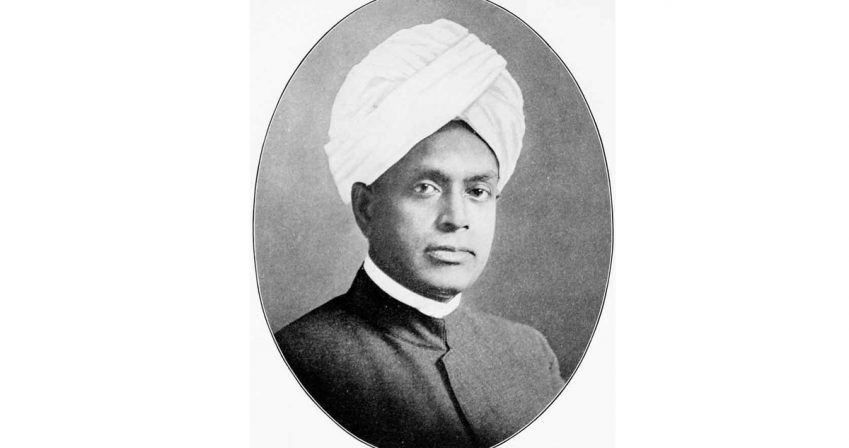
Sir Ponnambalam Ramanathan KCMG KC
In 1907 Ramanathan rebuilt the Sri Ponnambala Vaneswara Temple at Sea Street in Kochchikade, founded by his father. He helped establish the Hindu Education Board in 1923 and served as its president and manager of schools. He was also president of the Thiruvalluvar Maha Sabai in Madras. Ramanathan and other leading figures founded The Ceylonese, an English-language newspaper, in 1913. He was president of the Tamil Union Cricket and Athletic Club from 1917 to 1930. Ramanathan opposed extending voting rights to the people and urged reservation of franchise only to men of the Vellalar caste.
His life was devoted to yoga and in 1902 he published a book entitled An Eastern Exposition of the Gospel of Jesus according to St John in which he applied the teachings of Christ to the practise of yoga.