Fourth Prime Minister of Sri Lanka (1956 – 59)
Who We Are
- The Inner Temple Today
- Bench Table Orders
- Education and Qualification Rules
- Consultation Responses
- Time to Change
- Social Mobility Employer Index
- The Council of the Inns of Court
- Anti-Bribery
- Applications Misconduct Policy
- Car Park Terms and Conditions
- Equality & Diversity
- Freedom of Information
- Complaints
- Licensing
- Conflicts of Interest
- Scholarships Travel Reimbursement Policy
- PASS Travel, Accommodation and Subsistence Policy
- Privacy
- Outreach Safeguarding Policy
- 🔗 Searcys Anti-Slavery Policy
- Scholarships Feedback Policy
- Scholarships Deferrals Policy
- Modern Slavery and Human Trafficking Policy
- Environmental Policy
- Scholarships Appeals Policy
- Pupils Advocacy Course Appeals Policy
- Sponsorship for Student Societies
- Social Media for Student Societies
- Volunteer and Participant Code of Conduct
- We Are a Living Wage Employer
- Admissions Database 1547-1940
- The Archives
- Bench Table Orders 1845-1945
- Calendars of Inner Temple Records 1505-1845
- Introduction
- Diversity Timeline
- Edward Akufo-Addo
- Obafemi Awolowo
- Joyce Bamford-Addo
- Solomon Brandaranaike
- Charlotte Boaitey-Kwarteng
- Joseph Ephraim Casely Hayford
- Eugenia Charles
- S Chelvan
- Thomas Morris Chester
- Learie Constantine
- Edward Cragg Haynes
- Patricia Dangor
- Coomee Rustom Dantra
- Gifty Edila
- Ezlynn Deraniyagala
- Taslim Olawale Elias
- Martin Forde
- Arthur Dion Hanna
- Ma Pwa Hmee
- Alexander Isbister
- Sibghatullah Kadri
- Seretse Kharma
- Moleleki Didwell Mokama
- Tunde Okewale
- Ashitey Ollennu
- Vallabhbhai Patel
- Lily Tie Ten Quee
- Ponnambalam Ramanathan
- Edward Richards
- Khushwant Singh
- Manjiit Singh Gill
- Teo Soon Kim
- Leslie Thomas
- Stella Thomas
- Leonard Woodley
- The Christmas Accounts 1614-82
- The Freehold
- Charles and Mary Lamb in the Inner Temple
- Grand Day
- Life in Halls: Designs of the Previous Incarnations of the Inner Temple Hall
- Gorboduc, or the Tragedy of Ferrex and Porrox
- Lord Robert Dudley, 'chief patron and defender' of the Inner Temple
- Lost in the Past : The Rediscovered Archives of Clifford's Inn
- Paintings
- Phoenix from the Ashes: The Post-War Reconstruction Of The Inner Temple
- Silver - Extract from 'A Community of Communities'
- The "Unfortunate Marriage" of Seretse Khama
- The admission of overseas students to the Inner Temple in the 19th century
- The Inns Of Court & Inns Of Chancery & their Records
- William Cowper of the Inner Temple
- William Niblett - A Life Re-Examined
- History of The Inner Temple Video
- Library Manuscripts
- Magna Carta Timeline
- Paintings Collection
- Pegasus Emblem
- Silver Collection
- Introduction
- Timeline
- Joyce Bamford-Addo
- Marion Billson
- Jill Black
- Elizabeth Butler-Sloss
- Sue Carr
- Eugenia Charles
- Lynda Clark
- Freda Corbet
- Coomee Rustom Dantra
- Leeona Dorrian
- Heather Hallett
- Frene Ginwala
- Rosalyn Higgins
- Daw Phar Hmee
- Lim Beng Hong
- Dorothy Knight Dix
- Sara Lawson
- Elizabeth Lane
- Theodora Llewelyn Davies
- Gladys Ramsarran
- Lucy See
- Evelyn Sharp
- Victoria Sharp
- Ingrid Simler
- Teo Soon Kim
- Ivy Williams
- The Significance of the Sex Disqualification (Removal) Act 1919
- Women in Law Podcasts
- Notable Members
- Our People
- Work for Us
Home › Who We Are › History › Celebrating Diversity at the Bar › Solomon Brandaranaike
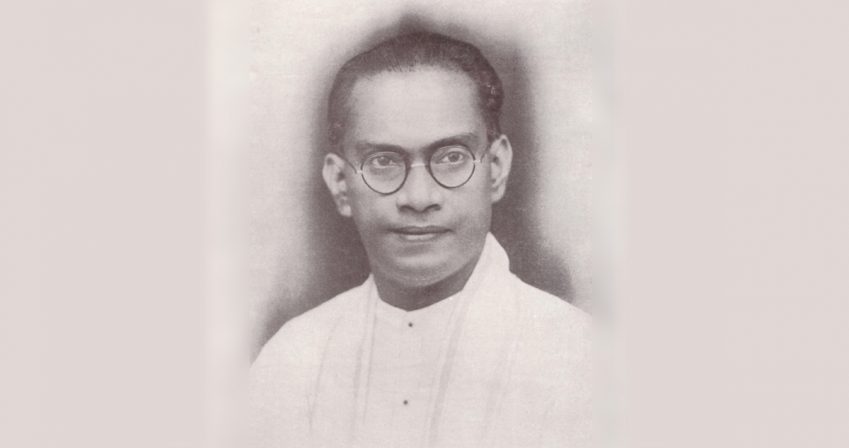
The Honourable S.W.R.D. Bandaranaike
1899 - 1959
Call 1924, Inner Temple
During his early life Bandaranaike was largely tutored at home by Englishmen, A E Radford and Henry Young, later attending St Thomas’s College, Mount Lavinia. He then went on to read PPE (modern greats, as it was termed) at Oxford, where he was Secretary of the Oxford Union and President of the Majlis Society (a debating society, similar to the Union, for Indians and others of South Asian heritage). He graduated in 1923.
As with a significant number of future leaders of former colonies, Bandaranaike was called to the Bar, Inner Temple, in 1924. He returned to Sri Lanka (formerly Ceylon) and was admitted as an advocate of the Supreme Court of Ceylon.
He quickly turned to politics and served on the State Council of Ceylon between 1931 and 1947, including a term as Minister of Local Administration. He was active in advocating self-rule for Ceylon, working closely with the first Prime Minister of Ceylon following independence in 1948, D S Senanayake (1994-1952). He formed the left wing Sri Lanka Freedom Party in 1951 and a landslide victory in 1956 saw him installed as the fourth Prime Minister of Ceylon. He oversaw significant reforms including nationalising buses and the Port of Colombo, prohibiting caste-based discrimination, removing British military bases and establishing diplomatic missions with a number of communist states. Controversial was the process of making Sinhala the sole official language, thereby marginalising Tamils and also factions of the middle-class educated elite whose education and first language was English (although note that this issue is complex with an enduring narrative).
The Honourable S.W.R.D. Bandaranaike
He married Sirima Ratwatte (1916-2000) in 1940 and they had three children. His wife, later known as Sirimavo, followed him in political office, becoming the first woman Prime Minister in the world from 1960-1965, 1970-1977 and 1994-2000. Their daughter, Chandrika Kumaratunga (b1943) was briefly PM in 1994 and then the first woman President of Sri Lanka from 1994-2005. Their son, Anura Bandaranaike (1949-2008) was Speaker of the SL Parliament 2000-2001 and 2004-2008, and a minister from 2004-2008. The eldest daughter Sunethra Bandaranaike (b1943), has concentrated on charity work.
The couple were both from elite Sinhala political families who had worked in the service of the colonial regimes for centuries.
Bandaranaike was a first cousin of Ezlynn Deraniyagala (1908-1973), the first woman barrister and advocate in Ceylon. His mother, Daisy, and Deraniyagala’s father, Sir Forester Obeysekera (also admitted to the London bar), were siblings.
In September 1959, Bandaranaike was shot by a Buddhist monk who was hanged for the murder. His legacy has been mixed with both honours and blame for the decades of division and war ascribed to Bandaranaike’s strong Sinhala partisanship.