Singaporean barrister who became the first woman admitted to the Straits Settlement Bar, the first female barrister in Hong Kong, as well as the third Malayan Chinese woman to be a Barrister in England.
Who We Are
- The Inner Temple Today
- Bench Table Orders
- Education and Qualification Rules
- Consultation Responses
- Time to Change
- Social Mobility Employer Index
- The Council of the Inns of Court
- Anti-Bribery
- Applications Misconduct Policy
- Car Park Terms and Conditions
- Equality & Diversity
- Freedom of Information
- Complaints
- Licensing
- Conflicts of Interest
- Scholarships Travel Reimbursement Policy
- PASS Travel, Accommodation and Subsistence Policy
- Privacy
- Outreach Safeguarding Policy
- 🔗 Searcys Anti-Slavery Policy
- Scholarships Feedback Policy
- Scholarships Deferrals Policy
- Modern Slavery and Human Trafficking Policy
- Environmental Policy
- Scholarships Appeals Policy
- Pupils Advocacy Course Appeals Policy
- Sponsorship for Student Societies
- Social Media for Student Societies
- Volunteer and Participant Code of Conduct
- We Are a Living Wage Employer
- Admissions Database 1547-1940
- The Archives
- Bench Table Orders 1845-1945
- Calendars of Inner Temple Records 1505-1845
- Introduction
- Diversity Timeline
- Edward Akufo-Addo
- Obafemi Awolowo
- Joyce Bamford-Addo
- Solomon Brandaranaike
- Charlotte Boaitey-Kwarteng
- Joseph Ephraim Casely Hayford
- Eugenia Charles
- S Chelvan
- Thomas Morris Chester
- Learie Constantine
- Edward Cragg Haynes
- Patricia Dangor
- Coomee Rustom Dantra
- Gifty Edila
- Ezlynn Deraniyagala
- Taslim Olawale Elias
- Martin Forde
- Arthur Dion Hanna
- Ma Pwa Hmee
- Alexander Isbister
- Sibghatullah Kadri
- Seretse Kharma
- Moleleki Didwell Mokama
- Tunde Okewale
- Ashitey Ollennu
- Vallabhbhai Patel
- Lily Tie Ten Quee
- Ponnambalam Ramanathan
- Edward Richards
- Khushwant Singh
- Manjiit Singh Gill
- Teo Soon Kim
- Leslie Thomas
- Stella Thomas
- Leonard Woodley
- The Christmas Accounts 1614-82
- The Freehold
- Charles and Mary Lamb in the Inner Temple
- Grand Day
- Life in Halls: Designs of the Previous Incarnations of the Inner Temple Hall
- Gorboduc, or the Tragedy of Ferrex and Porrox
- Lord Robert Dudley, 'chief patron and defender' of the Inner Temple
- Lost in the Past : The Rediscovered Archives of Clifford's Inn
- Paintings
- Phoenix from the Ashes: The Post-War Reconstruction Of The Inner Temple
- Silver - Extract from 'A Community of Communities'
- The "Unfortunate Marriage" of Seretse Khama
- The admission of overseas students to the Inner Temple in the 19th century
- The Inns Of Court & Inns Of Chancery & their Records
- William Cowper of the Inner Temple
- William Niblett - A Life Re-Examined
- History of The Inner Temple Video
- Library Manuscripts
- Magna Carta Timeline
- Paintings Collection
- Pegasus Emblem
- Silver Collection
- Introduction
- Timeline
- Joyce Bamford-Addo
- Marion Billson
- Jill Black
- Elizabeth Butler-Sloss
- Sue Carr
- Eugenia Charles
- Lynda Clark
- Freda Corbet
- Coomee Rustom Dantra
- Leeona Dorrian
- Heather Hallett
- Frene Ginwala
- Rosalyn Higgins
- Daw Phar Hmee
- Lim Beng Hong
- Dorothy Knight Dix
- Sara Lawson
- Elizabeth Lane
- Theodora Llewelyn Davies
- Gladys Ramsarran
- Lucy See
- Evelyn Sharp
- Victoria Sharp
- Ingrid Simler
- Teo Soon Kim
- Ivy Williams
- The Significance of the Sex Disqualification (Removal) Act 1919
- Women in Law Podcasts
- Notable Members
- Our People
- Work for Us
Home › Who We Are › History › Celebrating Diversity at the Bar › Teo Soon Kim
Teo Soon Kim
1904 – 1978
Call 1927, Inner Temple
Teo Soon Kim was the eldest daughter of a wealthy Singapore pioneer, Teo Eng Hock, a rubber magnate. After attending the Methodist Girls’ School, Teo moved to England in 1923 where she enrolled at University College, London practising Latin, English, History, Mathematics and Geography in order to be admitted as a law student at The Inner Temple.
Teo was arguably the most influential woman of Singapore’s judicial history and did not allow societal norms prevent her from breaking ground within the legal profession. In a male-dominated occupation, Teo was discouraged by many about not only the difficulty of studying law so far from home, but also entering an industry populated solely by affluent males, yet her head mistress at the Methodist Girls’ School saw her potential and simply told her,
Despite being part of Singapore’s judicial hall of fame, Teo’s appearance in court was very infrequent, spending a large chunk of her career as a lecturer teaching English at various Asian universities. Notably, her most prominent case was defending her father who was detained by the Kuomintang government for joining the government of Wang Ching-wei, who served as the head of state for the Japanese puppet government. Teo won the case leading to his release and the return of his family’s properties and assets. Teo spent her later life amidst the tumultuous years of the Cultural Revolution in which she was unjustly confined three times to a “cow pen” after Chairman Mao seized control of China in a mission to purge remnants of capitalist and traditional elements of Chinese Society. She later died suddenly of cardiovascular disease at Anhui University in Heefei within her staff quarters no bigger than 15sqm.
32 years after her death, her ashes were laid to rest in the Garden of Remembrance in Singapore by Wang Lei, her granddaughter, along with pieces of Teo Soon Kim’s forgotten past.
go right ahead, child; you will do it.
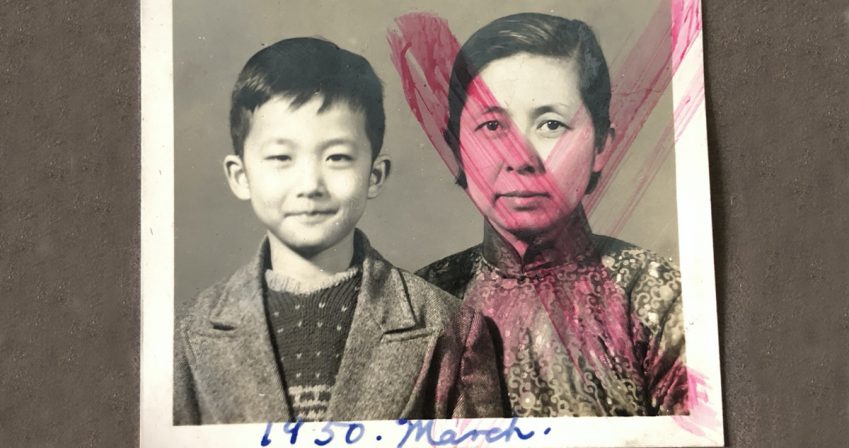
Teo Soon Kim
Despite being part of Singapore’s judicial hall of fame, Teo’s appearance in court was very infrequent, spending a large chunk of her career as a lecturer teaching English at various Asian universities. Notably, her most prominent case was defending her father who was detained by the Kuomintang government for joining the government of Wang Ching-wei, who served as the head of state for the Japanese puppet government. Teo won the case leading to his release and the return of his family’s properties and assets. Teo spent her later life amidst the tumultuous years of the Cultural Revolution in which she was unjustly confined three times to a “cow pen” after Chairman Mao seized control of China in a mission to purge remnants of capitalist and traditional elements of Chinese Society. She later died suddenly of cardiovascular disease at Anhui University in Heefei within her staff quarters no bigger than 15sqm.
32 years after her death, her ashes were laid to rest in the Garden of Remembrance in Singapore by Wang Lei, her granddaughter, along with pieces of Teo Soon Kim’s forgotten past.
Phoebe-Jean Grainger