First female Treasurer of the Inn and first female member of Court of Appeal
Who We Are
- The Inner Temple Today
- Bench Table Orders
- Education and Qualification Rules
- Consultation Responses
- Time to Change
- Social Mobility Employer Index
- The Council of the Inns of Court
- Anti-Bribery
- Applications Misconduct Policy
- Car Park Terms and Conditions
- Equality & Diversity
- Freedom of Information
- Complaints
- Licensing
- Conflicts of Interest
- PASS Travel, Accommodation and Subsistence Policy
- Privacy
- Outreach Safeguarding Policy
- 🔗 Searcys Anti-Slavery Policy
- Scholarships Feedback Policy
- Scholarships Deferrals Policy
- Modern Slavery and Human Trafficking Policy
- Environmental Policy
- Scholarships Appeals Policy
- Pupils Advocacy Course Appeals Policy
- Sponsorship for Student Societies
- Social Media for Student Societies
- Volunteer and Participant Code of Conduct
- We Are a Living Wage Employer
- Admissions Database 1547-1940
- The Archives
- Bench Table Orders 1845-1945
- Calendars of Inner Temple Records 1505-1845
- Introduction
- Diversity Timeline
- Edward Akufo-Addo
- Obafemi Awolowo
- Joyce Bamford-Addo
- Solomon Brandaranaike
- Charlotte Boaitey-Kwarteng
- Joseph Ephraim Casely Hayford
- Eugenia Charles
- S Chelvan
- Thomas Morris Chester
- Learie Constantine
- Edward Cragg Haynes
- Patricia Dangor
- Coomee Rustom Dantra
- Gifty Edila
- Ezlynn Deraniyagala
- Taslim Olawale Elias
- Martin Forde
- Arthur Dion Hanna
- Ma Pwa Hmee
- Alexander Isbister
- Sibghatullah Kadri
- Seretse Kharma
- Moleleki Didwell Mokama
- Tunde Okewale
- Ashitey Ollennu
- Vallabhbhai Patel
- Lily Tie Ten Quee
- Ponnambalam Ramanathan
- Edward Richards
- Khushwant Singh
- Manjiit Singh Gill
- Teo Soon Kim
- Leslie Thomas
- Stella Thomas
- Leonard Woodley
- The Christmas Accounts 1614-82
- The Freehold
- Charles and Mary Lamb in the Inner Temple
- Grand Day
- Life in Halls: Designs of the Previous Incarnations of the Inner Temple Hall
- Gorboduc, or the Tragedy of Ferrex and Porrox
- Lord Robert Dudley, 'chief patron and defender' of the Inner Temple
- Lost in the Past : The Rediscovered Archives of Clifford's Inn
- Paintings
- Phoenix from the Ashes: The Post-War Reconstruction Of The Inner Temple
- Silver - Extract from 'A Community of Communities'
- The "Unfortunate Marriage" of Seretse Khama
- The admission of overseas students to the Inner Temple in the 19th century
- The Inns Of Court & Inns Of Chancery & their Records
- William Cowper of the Inner Temple
- William Niblett - A Life Re-Examined
- History of The Inner Temple Video
- Library Manuscripts
- Magna Carta Timeline
- Paintings Collection
- Pegasus Emblem
- Silver Collection
- Introduction
- Timeline
- Joyce Bamford-Addo
- Marion Billson
- Jill Black
- Elizabeth Butler-Sloss
- Sue Carr
- Eugenia Charles
- Lynda Clark
- Freda Corbet
- Coomee Rustom Dantra
- Leeona Dorrian
- Heather Hallett
- Frene Ginwala
- Rosalyn Higgins
- Daw Phar Hmee
- Lim Beng Hong
- Dorothy Knight Dix
- Sara Lawson
- Elizabeth Lane
- Theodora Llewelyn Davies
- Gladys Ramsarran
- Lucy See
- Evelyn Sharp
- Victoria Sharp
- Ingrid Simler
- Teo Soon Kim
- Ivy Williams
- The Significance of the Sex Disqualification (Removal) Act 1919
- Women in Law Podcasts
- Notable Members
- Our People
- Work for Us
Home › Who We Are › History › Women in Law › Our Women › Elizabeth Butler-Sloss
The Rt Hon the Baroness Butler-Sloss GBE
(née Havers, created Baroness Butler-Sloss of Marsh Green in 2006, b. 1933)
Admitted 1951, Called 1955, Treasurer 1998
Elizabeth Butler-Sloss was called to the Bar in 1955. In 1979 she was the fourth woman to be appointed a High Court judge, and in 1988 she became the first woman to be appointed a Lord Justice of Appeal. In 1999 she became the President of the Family Division of the High Court of Justice and consequently the highest-ranking female judge in the UK. During her judicial career she chaired the Cleveland child abuse enquiry (which led to the Children Act 1989) and was responsible for the ruling that the child killers of James Bulger should receive lifelong anonymity. She was created Baroness Butler-Sloss, a life peer, in 2006.
She was born Elizabeth Havers, daughter of the QC and High Court Judge Sir Cecil Havers. Her elder brother Robert also became a barrister, QC and eventually a life peer and Attorney General. She was educated at Wycombe Abbey School, then spent a year at the University of Lausanne before being admitted to The Inner Temple in 1951 without a university degree. In a later interview, she described her father’s attitude to her decision to become a barrister as:
When she was called to the Bar in 1955, women still made up only 3% of barristers. She remembers her chambers as a very accepting place for her as a woman. However, she did encounter prejudice elsewhere, notably in the person of a solicitor who, five years after her Call, refused her services in favour of a man who was still serving his pupillage, purely on the basis of her gender.
In 1958, Elizabeth married Joe Butler-Sloss, who was also a barrister. She had three children and continued to practise law in spite of the increasing challenge of balancing work and home life. When she was offered a job as a divorce registrar, her father told her it was a “backwater job” from which she could not expect promotion, but told her she owed it to her family to accept it as it would allow her to spend more time with her children. Against her expectations and those of her father, however, she was promoted to the High Court in 1979.
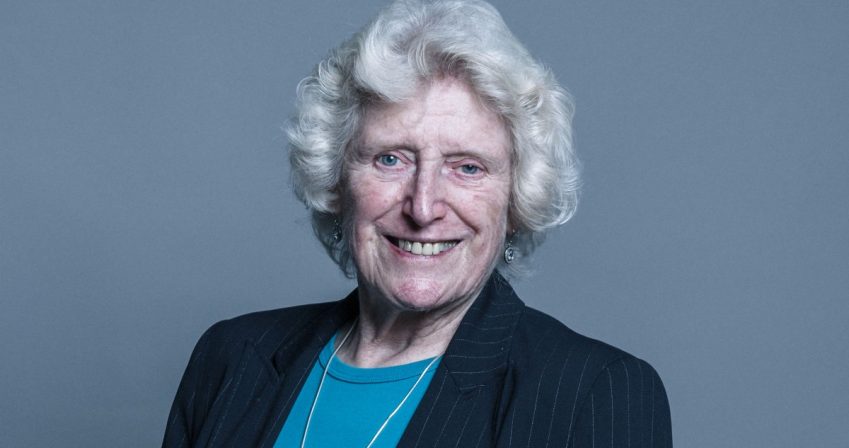
The Rt Hon the Baroness Butler-Sloss GBE
Butler-Sloss’s appointment as chair of the Cleveland Child Abuse Inquiry in 1987 made her much better known to the public. The Inquiry’s task was to investigate a steep and sudden rise in suspected sexual abuse cases in the Middlesbrough area. Over a five-month period, social services had removed 121 children from their homes on suspicion that they had been sexually abused. Butler-Sloss concluded in her report that the vast majority of the abuse accusations were false; 94 of the children were later returned to their homes. The results of the Inquiry were a major contributor to the passing of the Children Act 1989, which sought to rebalance the law in favour of the rights of children rather than parents or local authorities.
In 1988, Butler-Sloss was the first woman to be appointed to the Court of Appeal: her official title was Lord Justice Butler-Sloss, until the Master of the Rolls intervened to give official approval to the title of Lady Justice. When in 1999 she was made President of the High Court’s Family Division, she became (and remained until 2004) the highest-ranking woman in the judiciary.
Butler-Sloss’s career both in the Court of Appeal and in retirement has been a high-profile one. In 2001, she ruled that Jon Venables and Robert Thompson, the 10-year-old boys who murdered James Bulger, should be given lifelong anonymity. From 2004 to 2007 she chaired the inquests into the deaths of Diana, Princess of Wales and Dodi Fayed. Her position as head of the Family Division made her a frequent target for parents angered by court decisions over the custody of their children. She was chosen to lead the Independent Inquiry into Child Sexual Abuse in 2014, but stepped down after only a few days to avoid accusations of a conflict of interest: her brother had been Attorney General when some of the alleged abuse took place.
She retired in 2005 as President of the Family Division of the High Court but has continued to be active in public life as a crossbencher in the House of Lords. She is currently Co-Chairman of All Party Parliamentary Group on Religion in the Media.