First woman Permanent Secretary
Who We Are
- The Inner Temple Today
- Bench Table Orders
- Education and Qualification Rules
- Consultation Responses
- Time to Change
- Social Mobility Employer Index
- The Council of the Inns of Court
- Anti-Bribery
- Applications Misconduct Policy
- Car Park Terms and Conditions
- Equality & Diversity
- Freedom of Information
- Complaints
- Licensing
- Conflicts of Interest
- PASS Travel, Accommodation and Subsistence Policy
- Privacy
- Outreach Safeguarding Policy
- 🔗 Searcys Anti-Slavery Policy
- Scholarships Feedback Policy
- Scholarships Deferrals Policy
- Modern Slavery and Human Trafficking Policy
- Environmental Policy
- Scholarships Appeals Policy
- Pupils Advocacy Course Appeals Policy
- Sponsorship for Student Societies
- Social Media for Student Societies
- Volunteer and Participant Code of Conduct
- We Are a Living Wage Employer
- Admissions Database 1547-1940
- The Archives
- Bench Table Orders 1845-1945
- Calendars of Inner Temple Records 1505-1845
- Introduction
- Diversity Timeline
- Edward Akufo-Addo
- Obafemi Awolowo
- Joyce Bamford-Addo
- Solomon Brandaranaike
- Charlotte Boaitey-Kwarteng
- Joseph Ephraim Casely Hayford
- Eugenia Charles
- S Chelvan
- Thomas Morris Chester
- Learie Constantine
- Edward Cragg Haynes
- Patricia Dangor
- Coomee Rustom Dantra
- Gifty Edila
- Ezlynn Deraniyagala
- Taslim Olawale Elias
- Martin Forde
- Arthur Dion Hanna
- Ma Pwa Hmee
- Alexander Isbister
- Sibghatullah Kadri
- Seretse Kharma
- Moleleki Didwell Mokama
- Tunde Okewale
- Ashitey Ollennu
- Vallabhbhai Patel
- Lily Tie Ten Quee
- Ponnambalam Ramanathan
- Edward Richards
- Khushwant Singh
- Manjiit Singh Gill
- Teo Soon Kim
- Leslie Thomas
- Stella Thomas
- Leonard Woodley
- The Christmas Accounts 1614-82
- The Freehold
- Charles and Mary Lamb in the Inner Temple
- Grand Day
- Life in Halls: Designs of the Previous Incarnations of the Inner Temple Hall
- Gorboduc, or the Tragedy of Ferrex and Porrox
- Lord Robert Dudley, 'chief patron and defender' of the Inner Temple
- Lost in the Past : The Rediscovered Archives of Clifford's Inn
- Paintings
- Phoenix from the Ashes: The Post-War Reconstruction Of The Inner Temple
- Silver - Extract from 'A Community of Communities'
- The "Unfortunate Marriage" of Seretse Khama
- The admission of overseas students to the Inner Temple in the 19th century
- The Inns Of Court & Inns Of Chancery & their Records
- William Cowper of the Inner Temple
- William Niblett - A Life Re-Examined
- History of The Inner Temple Video
- Library Manuscripts
- Magna Carta Timeline
- Paintings Collection
- Pegasus Emblem
- Silver Collection
- Introduction
- Timeline
- Joyce Bamford-Addo
- Marion Billson
- Jill Black
- Elizabeth Butler-Sloss
- Sue Carr
- Eugenia Charles
- Lynda Clark
- Freda Corbet
- Coomee Rustom Dantra
- Leeona Dorrian
- Heather Hallett
- Frene Ginwala
- Rosalyn Higgins
- Daw Phar Hmee
- Lim Beng Hong
- Dorothy Knight Dix
- Sara Lawson
- Elizabeth Lane
- Theodora Llewelyn Davies
- Gladys Ramsarran
- Lucy See
- Evelyn Sharp
- Victoria Sharp
- Ingrid Simler
- Teo Soon Kim
- Ivy Williams
- The Significance of the Sex Disqualification (Removal) Act 1919
- Women in Law Podcasts
- Notable Members
- Our People
- Work for Us
Home › Who We Are › History › Women in Law › Our Women › Evelyn Sharp
The Rt Hon The Baroness Sharp GBE
(later GBE, Baroness Sharp of Hornsey, 1903-1985)
Admitted 1927, Not called
Evelyn Adelaide Sharp was born in 1903. Her father, the Reverend Charles James Sharp, was the vicar of Ealing. He was also a Liberal, active in local politics, who wanted his four daughters to have a career as much as his one son. His third daughter, Evelyn, initially appeared more interested in sporting than intellectual endeavour: she captained the cricket and netball teams at St Paul’s Girls’ School. However, she worked hard enough at university to earn a second-class degree in Modern History from Oxford.
In 1926, she joined the civil service, spending almost her whole career in departments dealing with housing and local government. This field became a particularly important one post-1945, as the government began to consider how to repair war damage and reform urban housing. Sharp was at the forefront of this effort, and was instrumental in the framing of the 1947 Town and Country Planning Act. She was a champion of the construction of new towns such as Milton Keynes. Like many in the political establishment of the time, she supported and indeed directed the construction of high-rise flats as a solution to poor-quality urban housing and overcrowding. This was something she later came to regret.
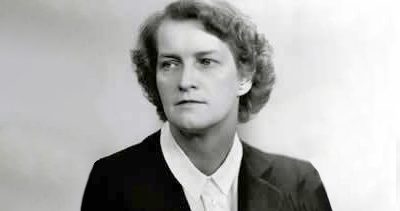
Evelyn Adelaide Sharp, Baroness Sharp by Elliott & Fry bromide print, 16 February 1950. Image source: https://www.npg.org.uk/collections/search/use-this-image/?email=&form=cc&mkey=mw102951
In 1955, Sharp was appointed Permanent Secretary, making her the most senior civil servant in her ministry and the first woman ever to rise to this rank. The civil service, it seemed, had overlooked the possibility that a woman could rise so high, as there was no separate women’s pay scale for the post, as there was for more junior roles. Consequently, she was paid the same salary as her male peers, a decade before equal pay became a civil service policy. She continued in the post until her retirement in 1966. Official honours reflected her high achievements: she was made DBE in 1948, GBE in 1961, and was created Baroness Sharp of Hornsey in 1968.
In a newspaper interview at her retirement, Sharp expressed regret that she had never married but felt that as a woman, she had had to choose between having a career and having a family: a choice which, she pointed out, a man would not have faced. Indeed, when she began her career in 1923, women in the civil service were still required to resign if they married.
Sources agree that Sharp was a gifted civil servant, forthright and strong-willed, though opinion is divided as to how she deployed those qualities. Her Times obituarist praised her candour, her lack of party-political bias and her loyalty and resourcefulness in carrying out her ministers’ decisions, regardless of her own opinion. Harold Macmillan called her,
Others saw her as autocratic: she clashed with Margaret Thatcher over local government, and her strong role in the demolition of old housing and the creation of high-rise estates made her many enemies. In 2005 the Guardian journalist Nick Cohen accused her of doing almost as much damage to Britain as the Luftwaffe.
From the point of view of gender equality, her great accomplishment was in breaking the glass ceiling in the civil service, both for herself and her successors. As her obituary records:
her capacities and achievements were such as to make it impossible, from her time onward, to question the right of a woman to hold the office and carry the responsibilities of a Permanent Secretary.