First Singaporean woman admitted to the Bar in Hong Kong and the Straits Settlements and first female barrister to appear at the Supreme Court in Singapore.
Who We Are
- The Inner Temple Today
- Bench Table Orders
- Education and Qualification Rules
- Consultation Responses
- Time to Change
- Social Mobility Employer Index
- The Council of the Inns of Court
- Anti-Bribery
- Applications Misconduct Policy
- Car Park Terms and Conditions
- Equality & Diversity
- Freedom of Information
- Complaints
- Licensing
- Conflicts of Interest
- Scholarships Travel Reimbursement Policy
- PASS Travel, Accommodation and Subsistence Policy
- Privacy
- Outreach Safeguarding Policy
- 🔗 Searcys Anti-Slavery Policy
- Scholarships Feedback Policy
- Scholarships Deferrals Policy
- Modern Slavery and Human Trafficking Policy
- Environmental Policy
- Scholarships Appeals Policy
- Pupils Advocacy Course Appeals Policy
- Sponsorship for Student Societies
- Social Media for Student Societies
- Volunteer and Participant Code of Conduct
- We Are a Living Wage Employer
- Admissions Database 1547-1940
- The Archives
- Bench Table Orders 1845-1945
- Calendars of Inner Temple Records 1505-1845
- Introduction
- Diversity Timeline
- Edward Akufo-Addo
- Obafemi Awolowo
- Joyce Bamford-Addo
- Solomon Brandaranaike
- Charlotte Boaitey-Kwarteng
- Joseph Ephraim Casely Hayford
- Eugenia Charles
- S Chelvan
- Thomas Morris Chester
- Learie Constantine
- Edward Cragg Haynes
- Patricia Dangor
- Coomee Rustom Dantra
- Gifty Edila
- Ezlynn Deraniyagala
- Taslim Olawale Elias
- Martin Forde
- Arthur Dion Hanna
- Ma Pwa Hmee
- Alexander Isbister
- Sibghatullah Kadri
- Seretse Kharma
- Moleleki Didwell Mokama
- Tunde Okewale
- Ashitey Ollennu
- Vallabhbhai Patel
- Lily Tie Ten Quee
- Ponnambalam Ramanathan
- Edward Richards
- Khushwant Singh
- Manjiit Singh Gill
- Teo Soon Kim
- Leslie Thomas
- Stella Thomas
- Leonard Woodley
- The Christmas Accounts 1614-82
- The Freehold
- Charles and Mary Lamb in the Inner Temple
- Grand Day
- Life in Halls: Designs of the Previous Incarnations of the Inner Temple Hall
- Gorboduc, or the Tragedy of Ferrex and Porrox
- Lord Robert Dudley, 'chief patron and defender' of the Inner Temple
- Lost in the Past : The Rediscovered Archives of Clifford's Inn
- Paintings
- Phoenix from the Ashes: The Post-War Reconstruction Of The Inner Temple
- Silver - Extract from 'A Community of Communities'
- The "Unfortunate Marriage" of Seretse Khama
- The admission of overseas students to the Inner Temple in the 19th century
- The Inns Of Court & Inns Of Chancery & their Records
- William Cowper of the Inner Temple
- William Niblett - A Life Re-Examined
- History of The Inner Temple Video
- Library Manuscripts
- Magna Carta Timeline
- Paintings Collection
- Pegasus Emblem
- Silver Collection
- Introduction
- Timeline
- Joyce Bamford-Addo
- Marion Billson
- Jill Black
- Elizabeth Butler-Sloss
- Sue Carr
- Eugenia Charles
- Lynda Clark
- Freda Corbet
- Coomee Rustom Dantra
- Leeona Dorrian
- Heather Hallett
- Frene Ginwala
- Rosalyn Higgins
- Daw Phar Hmee
- Lim Beng Hong
- Dorothy Knight Dix
- Sara Lawson
- Elizabeth Lane
- Theodora Llewelyn Davies
- Gladys Ramsarran
- Lucy See
- Evelyn Sharp
- Victoria Sharp
- Ingrid Simler
- Teo Soon Kim
- Ivy Williams
- The Significance of the Sex Disqualification (Removal) Act 1919
- Women in Law Podcasts
- Notable Members
- Our People
- Work for Us
Home › Who We Are › History › Women in Law › Our Women › Teo Soon Kim
Teo Soon Kim
(later Lo-Teo Soon Kim, 1904-1978)
Admitted 1924, Called 1927
Teo Soon Kim was born into a wealthy Chinese family in Singapore. Her father was a rubber magnate who, like the parents of many other women on this list, believed strongly that his daughter should be well educated. She and her sister were therefore sent to the Methodist Girls’ School in Singapore. Once she finished school Ms. Teo returned and taught there for just over two years: the principal remembered her as "capable, conscientious and faithful teacher".
Teo came to England in 1923 and enrolled at University College, London early the following year. As she had not yet got the necessary qualifications to study law, she spent the first half of 1924 on the UCL matriculation course. In June 1924, having passed exams in Latin, English, History, Mathematics and Geography, she was admitted as a law student.
Teo was keen to encourage other Chinese students to follow in her footsteps. In a letter to the Straits Times of Singapore in 1925, she emphasised the hospitality with which she had been treated:
As a student boarding with friends a young woman is made to feel at home… Friends that she has made in College, and some of them who live in the same neighbourhood, often invite her to their homes to tea or to some place of interest or amusement.
She was confident that others would encounter the same friendliness, remarking that a “foreign student, I can state as a fact, will find that everybody will be ready to oblige if she or he will only just speak up.”
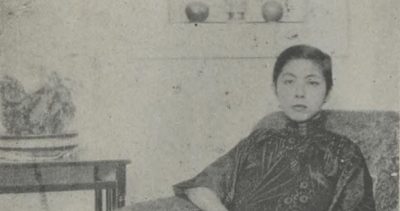
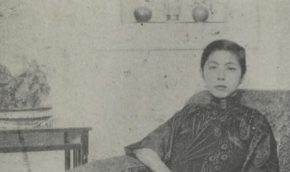
Teo Soon Kim
Teo’s privileged background undoubtedly helped her to enter the British establishment. To strengthen her application to The Inner Temple, her father used his connections to obtain testimonials from a Singaporean barrister of Middle Temple, Wong Siew Qui, as well as the commander of British forces in Malaya, Major General Sir Neill Malcolm. Malcolm also provided a reference for another young student from the Straits Settlements—Lim Beng Hong; who was Teo’s contemporary at The Inner Temple and the first ethnic Chinese woman to be called to the English Bar.
Teo’s attitude to her study of the law is reminiscent of George Mallory’s reported remark about Everest (made only shortly before her admission to The Inner Temple): that the mountain had to be climbed simply because it was there. She later said that she chose to be a lawyer because there were no female lawyers in Singapore. She recalled how, while some people had warned her about the difficulty of studying law so far from home, her headmistress at the Methodist Girls’ School had simply told her “go right ahead, child; you will do it”.
This confidence was not misplaced: Teo was called to the English Bar in 1927, and in 1929 she became the first Singaporean woman admitted to the Bar in the Straits Settlements (the British colony of which Singapore was then a part). She built a successful practice, and claimed that her gender had not put client off:
At first the people told me that my clients would feel a little nervous about going to a woman for legal advice, but that I find is not true. People come to me of their own accord and, in the main, introduce their womanfolk, especially when the case concerns women. Once you get the confidence of your client everything should be well.
In 1932 she was the first female barrister to appear at the Supreme Court in Singapore. She won the case, in which she was defending a farmer accused of murdering his cousin. Later that year, Teo moved to Hong Kong, and became the first woman to be admitted to the Bar there.