First woman to be admitted to The Inner Temple
Who We Are
- The Inner Temple Today
- Bench Table Orders
- Education and Qualification Rules
- Consultation Responses
- Time to Change
- Social Mobility Employer Index
- The Council of the Inns of Court
- Anti-Bribery
- Applications Misconduct Policy
- Car Park Terms and Conditions
- Equality & Diversity
- Freedom of Information
- Complaints
- Licensing
- Conflicts of Interest
- Scholarships Travel Reimbursement Policy
- PASS Travel, Accommodation and Subsistence Policy
- Privacy
- Outreach Safeguarding Policy
- 🔗 Searcys Anti-Slavery Policy
- Scholarships Feedback Policy
- Scholarships Deferrals Policy
- Modern Slavery and Human Trafficking Policy
- Environmental Policy
- Scholarships Appeals Policy
- Pupils Advocacy Course Appeals Policy
- Sponsorship for Student Societies
- Social Media for Student Societies
- Volunteer and Participant Code of Conduct
- We Are a Living Wage Employer
- Admissions Database 1547-1940
- The Archives
- Bench Table Orders 1845-1945
- Calendars of Inner Temple Records 1505-1845
- Introduction
- Diversity Timeline
- Edward Akufo-Addo
- Obafemi Awolowo
- Joyce Bamford-Addo
- Solomon Brandaranaike
- Charlotte Boaitey-Kwarteng
- Joseph Ephraim Casely Hayford
- Eugenia Charles
- S Chelvan
- Thomas Morris Chester
- Learie Constantine
- Edward Cragg Haynes
- Patricia Dangor
- Coomee Rustom Dantra
- Gifty Edila
- Ezlynn Deraniyagala
- Taslim Olawale Elias
- Martin Forde
- Arthur Dion Hanna
- Ma Pwa Hmee
- Alexander Isbister
- Sibghatullah Kadri
- Seretse Kharma
- Moleleki Didwell Mokama
- Tunde Okewale
- Ashitey Ollennu
- Vallabhbhai Patel
- Lily Tie Ten Quee
- Ponnambalam Ramanathan
- Edward Richards
- Khushwant Singh
- Manjiit Singh Gill
- Teo Soon Kim
- Leslie Thomas
- Stella Thomas
- Leonard Woodley
- The Christmas Accounts 1614-82
- The Freehold
- Charles and Mary Lamb in the Inner Temple
- Grand Day
- Life in Halls: Designs of the Previous Incarnations of the Inner Temple Hall
- Gorboduc, or the Tragedy of Ferrex and Porrox
- Lord Robert Dudley, 'chief patron and defender' of the Inner Temple
- Lost in the Past : The Rediscovered Archives of Clifford's Inn
- Paintings
- Phoenix from the Ashes: The Post-War Reconstruction Of The Inner Temple
- Silver - Extract from 'A Community of Communities'
- The "Unfortunate Marriage" of Seretse Khama
- The admission of overseas students to the Inner Temple in the 19th century
- The Inns Of Court & Inns Of Chancery & their Records
- William Cowper of the Inner Temple
- William Niblett - A Life Re-Examined
- History of The Inner Temple Video
- Library Manuscripts
- Magna Carta Timeline
- Paintings Collection
- Pegasus Emblem
- Silver Collection
- Introduction
- Timeline
- Joyce Bamford-Addo
- Marion Billson
- Jill Black
- Elizabeth Butler-Sloss
- Sue Carr
- Eugenia Charles
- Lynda Clark
- Freda Corbet
- Coomee Rustom Dantra
- Leeona Dorrian
- Heather Hallett
- Frene Ginwala
- Rosalyn Higgins
- Daw Phar Hmee
- Lim Beng Hong
- Dorothy Knight Dix
- Sara Lawson
- Elizabeth Lane
- Theodora Llewelyn Davies
- Gladys Ramsarran
- Lucy See
- Evelyn Sharp
- Victoria Sharp
- Ingrid Simler
- Teo Soon Kim
- Ivy Williams
- The Significance of the Sex Disqualification (Removal) Act 1919
- Women in Law Podcasts
- Notable Members
- Our People
- Work for Us
Home › Who We Are › History › Women in Law › Our Women › Theodora Llewelyn Davies
Theodora Llewelyn Davies
(1898-1988)
Admitted 1920, Called 1922
Theodora Llewelyn Davies was the first woman to be admitted as a student to The Inner Temple, less than three weeks after the Sex Disqualification (Removal) Act had passed into law. The Inn was still a very masculine environment and was not entirely ready for female applicants: for example, there were no women’s lavatories, so Llewelyn Davies was given a key to the Benchers’ House, where there was a cloakroom for the use of lady guests.
She was also the first woman to dine in the Inn’s hall as a member. She later related how her older sister had accompanied her as far as the gate to give her moral support; and how the head waiter had directed her to the end of a bench so she would not have to climb into her seat, and kept the press at bay while she ate.
Llewelyn Davies was born in Birkenhead in 1898. Her family had a tradition of Liberal politics and social activism, which laid considerable importance on the education of women: her great aunt had founded Girton College, Cambridge (where Theodora studied Law), and her aunt was a long-serving and successful general secretary of the Women’s Co-operative Guild.
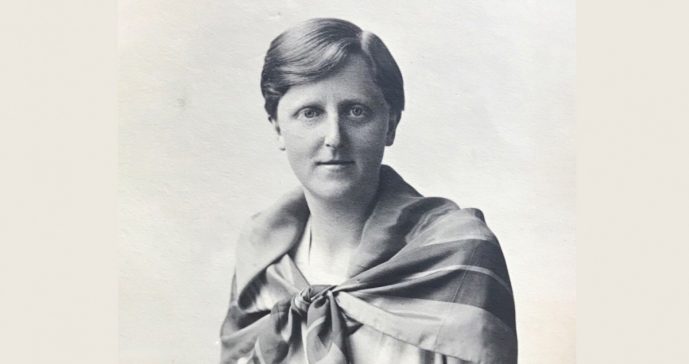
Theodora Llewelyn Davies
Her choice of career may have been inspired by her uncle, who was a barrister.
Her sister Mary also went to Girton, where she studied Medicine; she went on to qualify as a doctor in 1923.
Llewelyn Davies became the second female member of The Inner Temple to be called to the Bar on 17 November 1922, six months after Ivy Williams. Nine other women were called the same night, most (among them Monica Geikie Cobb and Helena Normanton) to Middle Temple.
Following her Call, Llewelyn Davies practised as a barrister for several years in the chambers of Theobald Mathew at 4 Paper Buildings. Mathew was famous in legal circles as a humourist and as pupil master (legal mentor) to many prominent political figures including Clement Attlee and Sir Stafford Cripps. In some cases she found that the wig and gown hid or distracted from her gender; in others it appeared that clients had actively chosen her in the belief that a young woman would treat them more kindly than would a man.
Alongside her legal practice, Llewelyn Davies continued the family tradition of social activism by working for the Howard League for Penal Reform. It was here that she met Roy Calvert, a campaigner against capital punishment. They married in 1929 and had two daughters. The new Mrs Calvert stopped her legal practice but continued to work with her husband to campaign for penal reform. In a later BBC documentary, she explained:
I decided that I would rather devote my time and interest to joining my husband and the work he was doing. In those days it wasn’t very customary for married women to work apart from their domestic duties and it didn’t really occur to me that it would be possible to combine the two.
Roy Calvert died suddenly and tragically early in 1933. After his death, Theodora continued to work with the Howard League, and took over Roy’s post as chairman of the National Campaign Against the Death Penalty. She returned to the law to undertake pro bono work for the underprivileged, and also served as a justice of the peace in Surrey
In 1988, her obituarist in the Times remembered her as:
and paid tribute to her wisdom, affection, courage, wit and sound judgement.